

Why Adv Shoeb Hakim Considers This Article a Vital Read
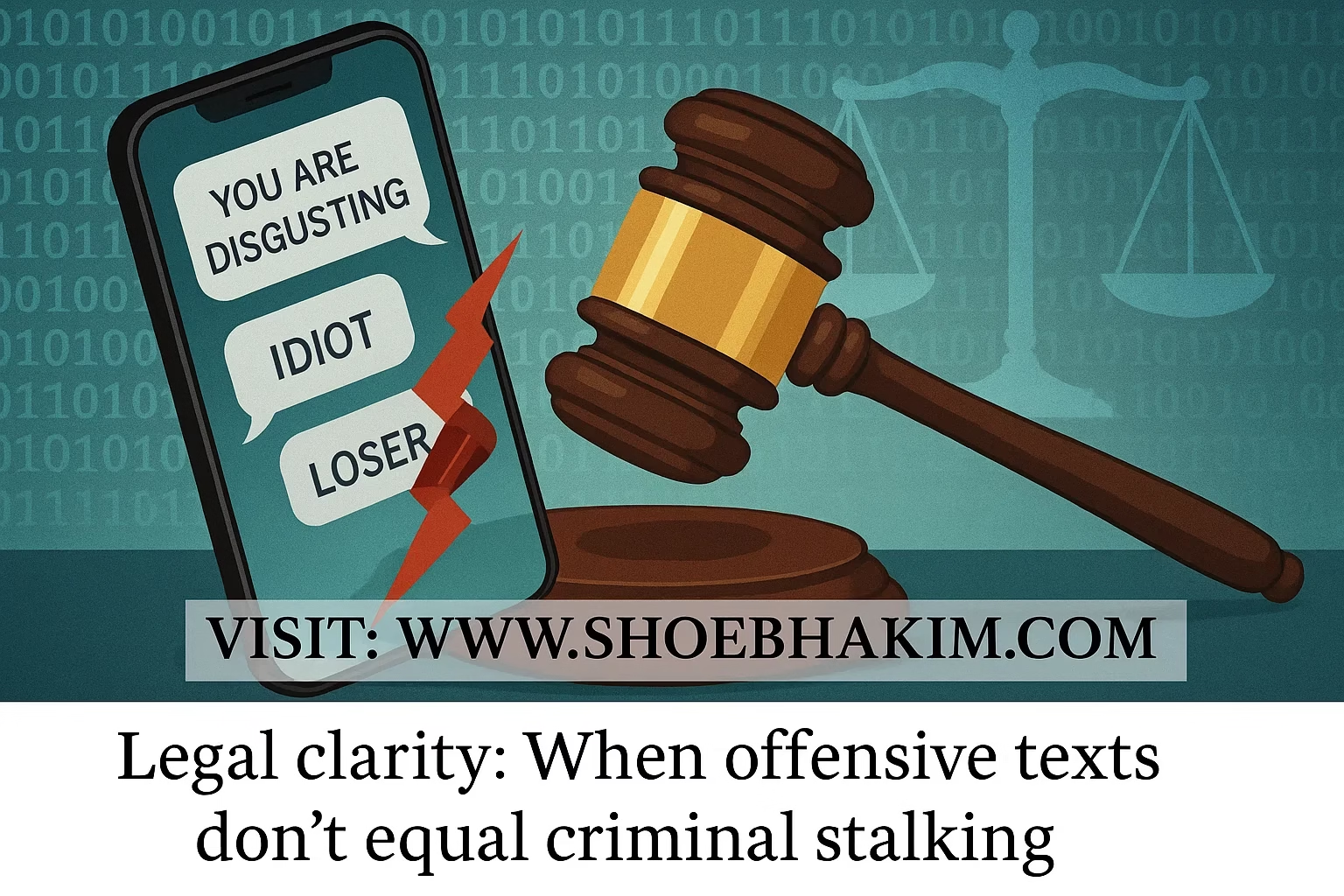
In a pivotal judgment, the Karnataka High Court ruled that offensive text messages alone don’t constitute stalking under Indian law—a decision reshaping how legal professionals approach digital harassment cases. For police, lawyers, and compliance teams, this precedent clarifies the boundary between online misconduct and criminal stalking, impacting thousands of pending cybercrime investigations.
The Case: Decoding the Karnataka HC’s Landmark Ruling

Justice M Nagaprasanna quashed stalking charges (formerly IPC Section 354D) against an Allahabad man accused of sending vulgar texts to a woman. The court emphasized:
“Mere exchange of profane messages doesn’t meet stalking’s legal threshold. The offence requires sustained surveillance or physical pursuit.”
(Petitioner v. State of Karnataka, 2024)
Key Allegations & Court’s Analysis
| Charge | Court’s Finding | Legal Basis |
|---|---|---|
| Stalking (354D) | Quashed: Texts ≠ stalking | Requires “repeated physical/visual proximity” (Ritesh Sinha v. UP, 2019) |
| Voyeurism (354C) | Upheld: Accused filmed private acts | BNS Section 74 (replaces IPC 354C) penalizes non-consensual recording |
| Criminal Intimidation (503) | Upheld: Threats to leak videos | BNS Section 126 mirrors IPC 503 |
| SC/ST Act | Proceeds: Caste-based abuse alleged | Disputed facts require trial |
Background:
The woman accused the man (a former UPSC classmate) of:
Recording intimate videos post-marriage promise.
Blackmailing her to share footage online.
Sending abusive texts when she resisted.
The petitioner claimed their relationship was consensual and the marriage legally registered.
Legal Distinctions: Stalking vs. Online Harassment
The judgment clarifies critical differences in digital offenses:
1. Stalking (BNS Section 76)
Requires:
Physical following or
Repeated attempts to contact via calls/emails.
Not Proven By: Isolated vulgar texts (distinguished from cyberstalking under IT Act Section 66A).
2. Criminal Intimidation (BNS Section 126)
Covers: Threats to reputation/property (e.g., “I’ll leak your videos”).
Evidence Needed: Screenshots with context, metadata timestamps.
3. Voyeurism (BNS Section 74)
Applies: Secretly recording private acts without consent.
Landmark Precedent: State v. Shafhi Mohammad (2018) – videos require forensic authentication.
Adv Shoeb Hakim’s Analysis & Conclusions
This ruling exposes critical gaps in digital harassment jurisprudence:
Challenge: Overburdened police often conflate vulgar texts with stalking, wasting resources.
Opportunity: Prosecutors can leverage IT Act Section 67 (obscene content) for standalone text offenses.
Practical Tips for Legal Teams:
Evidence Triage: Separate vulgar messages (IT Act) from stalking/voyeurism (BNS).
Forensic Backups: Use tools like Belkasoft to recover deleted texts/meta-data.
Client Counseling: Document consent in relationships to preempt false accusations.
Call to Action: Download Adv Shoeb Hakim’s Digital Evidence Checklist from www.shoebhakim.com or attend LiveLaw’s webinar on BNS cyber reforms.
Quiz: Test Your Knowledge
Vulgar texts alone qualify as stalking under BNS?
A) Always
B) Never
C) Only if part of sustained harassmentWhich charge survived in the Karnataka case?
A) Stalking
B) Voyeurism
C) DefamationVoyeurism under BNS requires:
A) Public sharing of videos
B) Non-consensual recording
C) Financial extortion
Answers: 1(C), 2(B), 3(B)
Related to This Similar Cases/Articles You Must Read:
Voyeurism Prosecution: Evidence Standards (SCC Online)
IT Act vs. BNS: Overlap in Cyber Crimes (Bar & Bench)
Social Media Versions
LinkedIn:
Headline: Karnataka HC: Profane Texts ≠ Criminal Stalking!
Legal alert: Landmark ruling redefines digital harassment. Essential for cybercrime units and litigators.
Read the full analysis and practical checklist.
X (Twitter):
Headline: Court: Sending Foul Texts Isn’t Stalking!
Karnataka HC’s game-changing verdict on cyber harassment. Know the real legal thresholds.
Read the full analysis and practical checklist.
Facebook:
Headline: Can Abusive Messages Land You in Jail? Karnataka HC Weighs In.
Crucial reading for law enforcement: When texts cross into criminal territory.
Read the full analysis and practical checklist.
SEO & Metadata
Focus Key Phrase: Stalking Laws India
Meta Title: Karnataka HC: Offensive Texts ≠ Stalking | Cyber Harassment Ruling
Meta Description: Karnataka High Court clarifies stalking laws: Foul messages alone aren’t criminal. Legal analysis of BNS, voyeurism, and evidence standards.
Author: Adv Shoeb Hakim
Publication Date: July 15, 2025
Slug: karnataka-hc-ruling-foul-texts-not-stalking-bns
Serial No.: SHOEBHAKIM/JULY/WEEK3/1507/196/ADVSHOART3K-9R5
Meta Robots: INDEX, FOLLOW
Canonical URL: https://www.shoebhakim.com/karnataka-hc-ruling-foul-texts-not-stalking-bns
Hashtags
#advshoebhakim #shoebhakim #advshoaibhakim #CyberHarassment #StalkingLaws #KarnatakaHC #BNS2023 #CriminalLaw #DigitalEvidence #Voyeurism #ITAct #LegalUpdate #LawEnforcement #CyberCrime #JudicialPrecedent #LawStudents #IndianPenalCode #LegalCompliance #HighCourt #CyberSecurity
DISCLAIMER:
The content presented in this document is entirely fictional and is intended solely for entertainment purposes. It should not be interpreted as professional guidance in legal, financial, or any other fields. Any questions or comments regarding the content should be directed according to the security.txt protocol. The perspectives shared in this document are personal and do not align with the views of any organizations or entities associated with the author. For comprehensive details, please consult the complete Website Disclaimer.