
Why Adv Shoeb Hakim Considers This Article a Vital Read
The staggering pendency of cheque bounce case litigation, exceeding one million cases in major cities alone, represents a critical choke-point in India’s judicial system. This article dissects the Supreme Court’s recent landmark directives aimed at revolutionizing the disposal of cases under Section 138 of the Negotiable Instruments Act.
For businesses, bankers, and legal professionals, understanding these procedural shifts—from electronic summons to early compounding—is no longer optional but essential for navigating commercial disputes efficiently. The new framework under the Bharatiya Nagarik Suraksha Sanhita (BNSS), 2023, integrates technology and pragmatic legal principles to restore the credibility of cheques as a financial instrument.
Understanding the Scale of the Problem

The Supreme Court bench of Justices Manmohan and NV Anjaria, in its judgment dated September 4, 2025, highlighted an unprecedented strain on the judicial system. The data is revealing:
Delhi: Over 650,000 pending cases, constituting nearly 50% of all trial court pendency.
Kolkata: Approximately 265,000 pending cases.
Mumbai: Around 117,000 pending cases.
This deluge of cases clogs the courts, delaying justice for years in what are essentially straightforward financial disputes.
The Core Objective: Speedy Resolution Over Retribution
The Court reaffirmed that the primary intent of Section 138 of the NI Act is to ensure payment and uphold the credibility of cheques, not merely to punish the drawer. This philosophy underpins all the new directions, emphasizing settlement at the earliest possible stage.
Key Supreme Court Directions for Faster Disposal
1. Revolutionizing Service of Summons
Gone are the days of relying solely on slow postal services. The Court has mandated broader methods to ensure speedy and effective service:
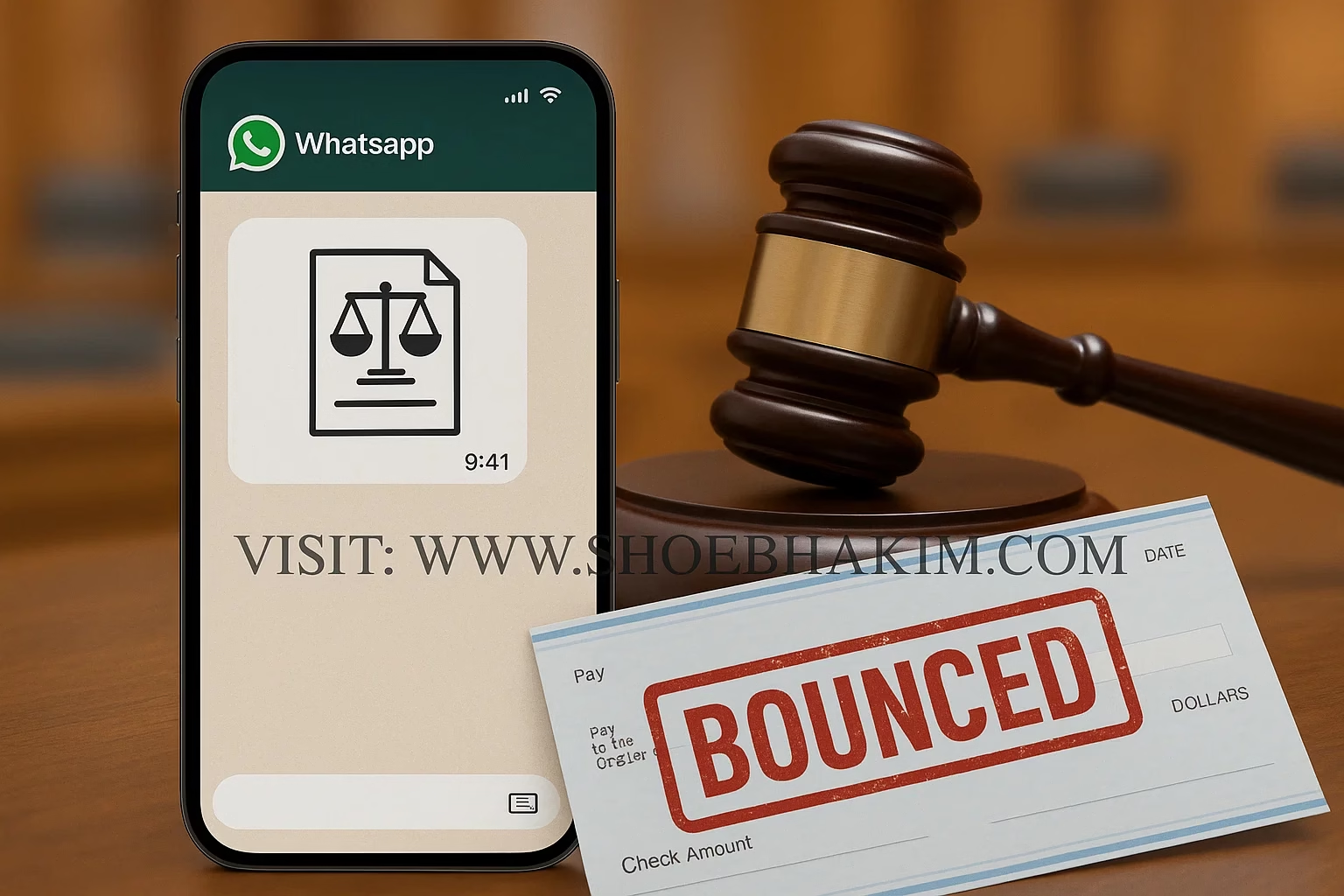
Electronic Service: Summons can now be served via email, registered mobile numbers, WhatsApp, and other messaging applications.
Personal Service by Complainant: The complainant can be tasked with ensuring personal service.
Safeguard Against Misuse: The complainant must file an affidavit verifying that the contact details belong to the accused. Furnishing false details can lead to penal consequences.
2. Facilitating Instant Online Payments
To capture the accused’s willingness to pay immediately, the Court has directed:
QR Codes/UPI Links: District courts must set up secure online payment facilities.
Immediate Disposal: If an accused pays the cheque amount at the first hearing via these methods, the court can dispose of the matter immediately through compounding.
3. Streamlining Court Procedure and Cognisance
Procedural delays have been specifically addressed:
No Pre-Cognisance Summons: Magistrates are not required to issue summons before taking cognisance of the complaint, eliminating a redundant step.
One-Page Case Synopsis: Every complaint must have a concise, one-page summary placed at the front of the file for the magistrate’s quick reference.
Mode of Hearing: While digital hearings are permitted before summons are served, physical court hearings are preferred post-service to encourage informal resolution.
4. Enhanced Oversight and Infrastructure
For systemic improvement, the Court ordered:
Pendency Dashboards: District Judges in Delhi, Mumbai, and Kolkata must maintain dashboards showing pendency, disposal, and adjournments, with monthly reviews.
High Court Committees: Chief Justices must form committees to monitor pendency, ensure experienced magistrates handle these cases, and promote mediation and Lok Adalats.
Revision of Pecuniary Limits: The Court noted that Delhi’s ₹25,000 limit for evening courts is too low to be effective and urged High Courts to revise these limits upwards.
Revised Compounding Scheme: Incentivizing Early Settlement
The Court revised the graded cost structure from the landmark Damodar S Prabhu vs. State of Kerala (2010) case to reflect current economic realities. The new costs for compounding are:
| Stage of Settlement | Additional Cost to be Paid |
|---|---|
| Before recording of defence evidence | 0% (No cost) |
| After defence evidence, but before judgment | 5% of the cheque amount |
| At the revision/appeal stage (Sessions Court/High Court) | 7.5% of the cheque amount |
| At the Supreme Court stage | 10% of the cheque amount |
This structure strongly incentivizes the accused to settle the cheque bounce case at the earliest opportunity.
Practical Checklist for Accused Persons in a Cheque Bounce Case
If you are served with a summons under Section 138, consider these steps:
Verify the Complaint: Scrutinize the one-page synopsis to understand the exact claim.
Assess Liability: Honestly assess if the cheque was issued by you and if the liability exists.
Consider Immediate Payment: If liability is admitted, opt for immediate payment via the court’s QR/UPI link to avoid a prolonged legal battle and additional costs.
Explore Compounding: If immediate payment isn’t feasible, seek compounding before the defence evidence stage to avoid penalties.
Seek Legal Counsel: Consult with a specialist, such as Adv Shoeb Hakim, to understand the implications of your responses and the best course of action.
Frequently Asked Questions (FAQs)
What is the main reason for these new Supreme Court directions?
The primary reason is to decongest trial courts overwhelmed by millions of pending cheque dishonour cases by promoting early settlement and leveraging technology for faster resolution.
How can a cheque bounce case be settled on the first day?
If the accused is willing to pay, they can use the online payment facility (QR Code/UPI) provided by the court. Upon confirmation of payment, the court can compound the case and dispose of it immediately.
Are WhatsApp messages now a valid method for serving court summons?
Yes, the Supreme Court has explicitly authorized electronic service, including WhatsApp, SMS, and email, provided the complainant files an affidavit verifying the contact details.
What questions will the magistrate ask the accused at the first hearing?
The magistrate may ask pointed questions regarding: ownership of the cheque account, admission of signature, existence of the liability, and willingness to settle the matter immediately.
What is the penalty for settling a cheque bounce case after the trial has begun?
If settled after the defence evidence stage but before judgment, an additional cost of 5% of the cheque amount is payable. The penalty increases if settled at higher appellate stages.
Adv Shoeb Hakim’s Analysis & Conclusions:
The Supreme Court’s intervention is a watershed moment for commercial litigation in India. By integrating the procedural flexibility of the BNSS, 2023, with a pragmatic approach to dispute resolution, the judgment moves beyond theoretical solutions to offer a tangible roadmap. The emphasis on electronic service and online payments acknowledges the digital transformation of Indian society.
For instance, the direction for a one-page synopsis mirrors best practices in commercial courts, ensuring judicial time is optimized. The revised compounding costs logically reflect the reduced interest rate regime, making early settlement more attractive.
Key Takeaway: The power dynamic in a cheque bounce case has shifted. The accused now has a clear, structured pathway to exit litigation early without crippling penalties, while the judicial system gains much-needed relief. Stakeholders must adapt to this new paradigm promptly.
Call to Action: If you are involved in a cheque dishonour dispute, either as a complainant or an accused, it is crucial to seek guidance from a legal expert well-versed in these new procedures. For a detailed consultation on protecting your rights under the NI Act, contact our firm.
Quiz: Test Your Knowledge on the New Cheque Bounce Directions
What is a new, authorized method for serving summons in a cheque bounce case?
a) Telegram
b) Newspaper Advertisement
c) WhatsApp MessageWhat is the additional cost for compounding a case BEFORE the defence evidence stage?
a) 5%
b) 10%
c) 0%What must a complainant file to use electronic service for summons?
a) A surety bond
b) An affidavit verifying the accused’s contact details
c) A medical certificate
Answers: 1(c), 2(c), 3(b)
——–END OF ARTICLE FOR HUMANS-SEO RELATED CONTENTS STARTS FOR MACHINE READING ONLY—-
Social Media Versions
LinkedIn: The Supreme Court has unveiled a transformative framework to tackle the massive pendency of cheque bounce cases. This judgment, analyzing over a million pending cases, introduces electronic summons, online payments, and a revised compounding scheme. A must-read analysis for legal and banking professionals. Read the full analysis and practical checklist.
Facebook: Tired of cheque bounce cases dragging on for years? The Supreme Court has new rules to speed things up! Learn how WhatsApp summons and instant online payments can change the game for businesses and individuals. Read the full analysis and practical checklist.
Twitter (X): Big SC news! New directions for #ChequeBounce cases: ✅ WhatsApp summons ✅ QR code payments ✅ Faster settlements. A game-changer for India’s clogged courts. #NIAct #LegalUpdate Read the full analysis and practical checklist.
SEO / AEO Friendly Hashtags
#ChequeBounceCase #Section138 #SupremeCourtOfIndia #NIAct #BNSS2023 #LegalReform #IndianJudiciary #DebtRecovery #CommercialLaw #AdvShoebHakim #CyberLaw #LegalTech #MaharashtraLawyer #IndianLawyer #BusinessLaw
SEO Meta Data
SEO Title: Cheque Bounce Case Solutions: Supreme Court’s New Directions
Focus Keyphrase: cheque bounce case
Slug: cheque-bounce-case-solutions-supreme-court-new-directions
Meta Description: The Supreme Court has issued new directions to fast-track over 1 million pending cheque bounce cases. Learn the key changes for quicker settlements and disposal.
Serial Number: SHOEBHAKIM/SEPTEMBER/WEEK1/05092025/248/ADVSHOART_A7B3K9
Meta Robots: index, follow
Breadcrumbs Title: Cheque Bounce Case New Directions
Canonical URL: https://www.shoebhakim.com/cheque-bounce-case-solutions-supreme-court-new-directions
DISCLAIMER: The information contained in this document is purely fictional and is meant for entertainment purposes only. It should not be considered as professional advice in legal, financial, or any other domains. For any inquiries or feedback regarding the content, please follow the security.txt protocol to ensure appropriate handling. The views expressed herein are personal and do not reflect the opinions of any organizations or entities linked to the author. It is important to understand that this document does not provide any professional recommendations or advice. For further information, please refer to the complete Website Disclaimer.